 ListOutlook
Ceramic Vase Care: Washing, Water Marks and Storage
Vases die from three things: being knocked, being put away dirty, and standing wet on wood. Care is mostly avoiding those.
Washing
Wash a vase after flowers come out of it — the green waterline slime is bacteria, and it stains. Warm water, a drop of washing-up liquid and a bottle brush handles most vases; narrow necks want the brush, or a handful of uncooked rice swirled in soapy water as the old trick goes. Rinse and dry upside down on a cloth, not on a hard draining board edge.
Water marks and hard water
The white tide-mark inside a vase is mineral deposit from evaporated hard water. A soak in warm water with white vinegar loosens it; a soft cloth or brush finishes the job. Glazed finishes shrug marks off; matte finishes show splashes on the outside, so wipe them dry rather than letting them air-dry spotty.
Terracotta and porous pieces
Unglazed terracotta breathes: water slowly migrates through it, which is why a terracotta vase on bare wood wants a saucer or mat under it even when it doesn't leak. If that behaviour is a problem in your home, terracotta is a dried-stem vase — its porousness is the character you bought.
Storage
Store vases dry, upright, and not nested rim-to-rim: a sheet of tissue or a cloth between stacked pieces stops the glaze chips that mysterious appear over winter. Heavy stoneware at the back of the cupboard, delicate porcelain where it won't be reached past.
Keep comparing
From the index
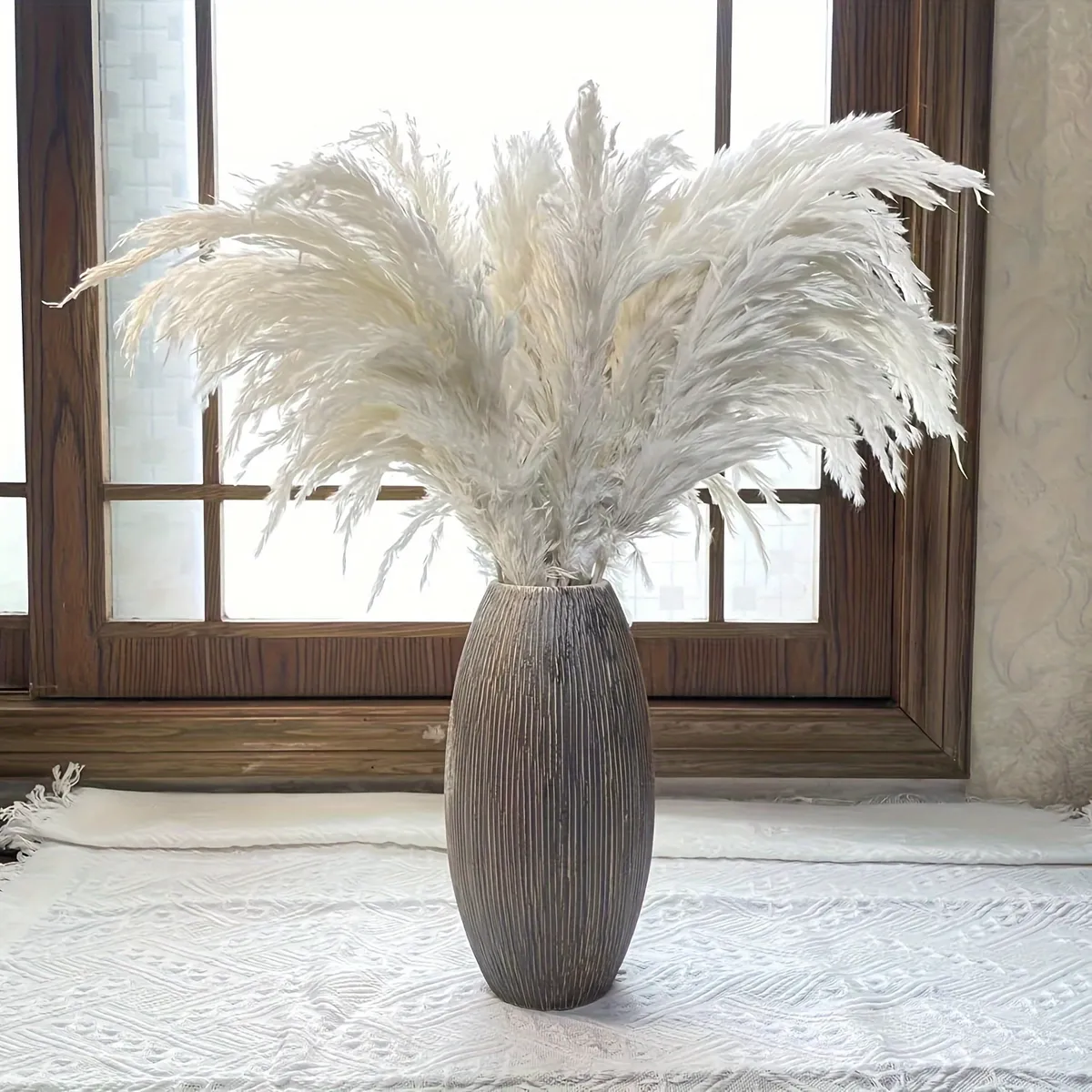 ALMA
ALMA Ceramic Boho Vase — White, 9 in tall
 Artissance
 Terracotta Vintage Vase — Grey, 10 in tall
 Bloomingville
 Stoneware Vase — Cream, 8.5 in tall
 Bloomingville