 ListOutlook
Balaclava vs Neck Gaiter vs Sun Mask: Which Face Cover Do You Actually Need?
Three products share one shelf and almost no jobs. A balaclava is winter armour, a neck gaiter is an adjustable tube, and a sun gaiter is the same tube with a UV rating and a summer calendar. Choosing is mostly a matter of temperature and what the day will ask of you.
How each one is actually worn
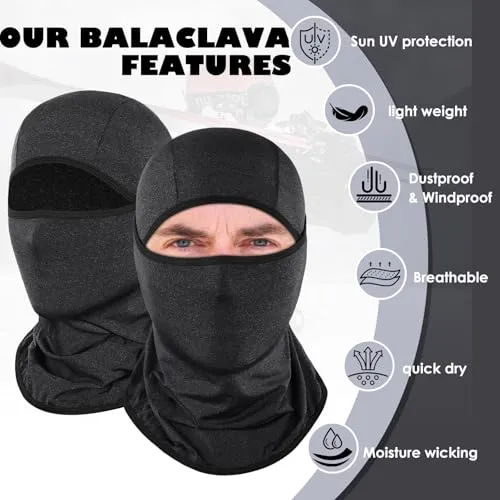
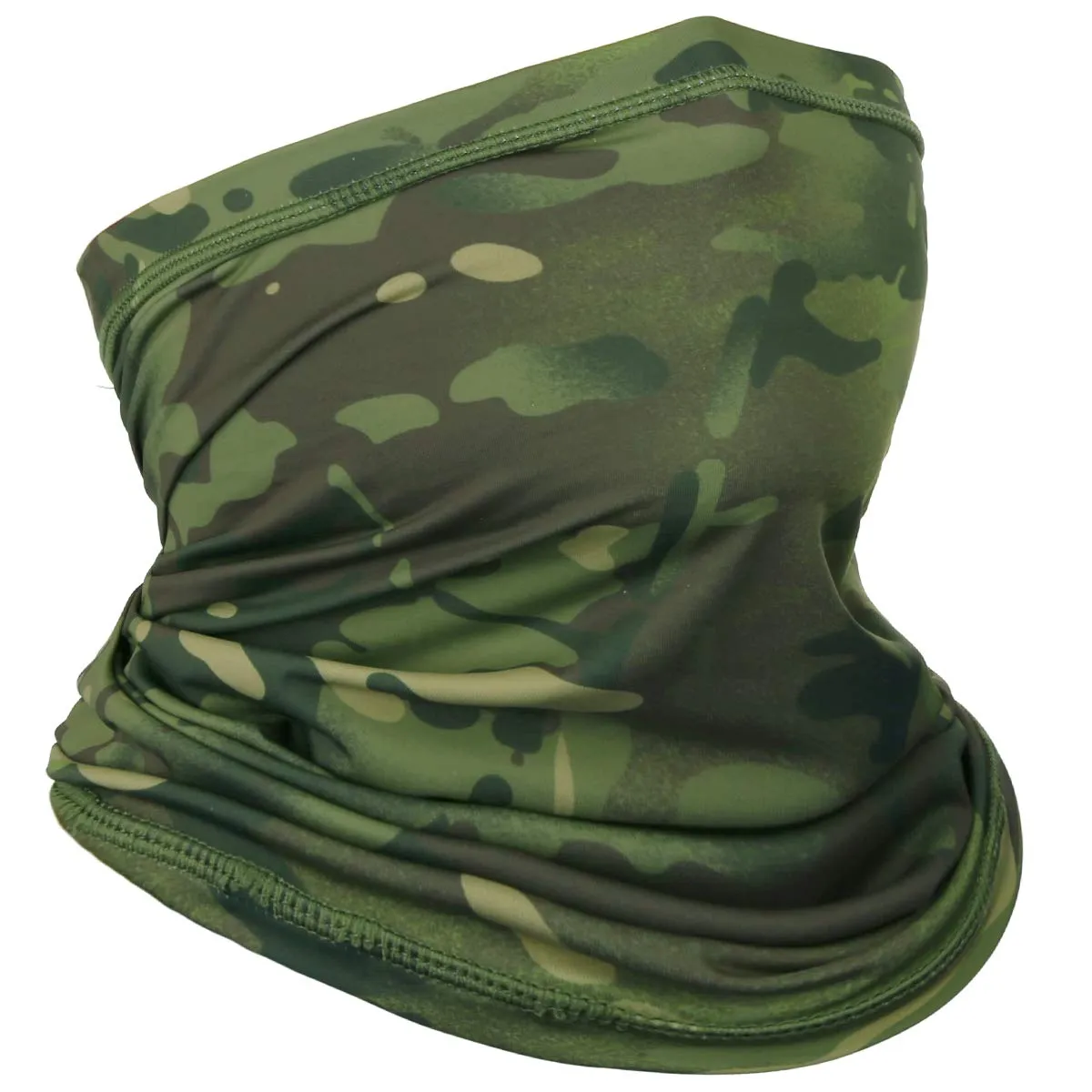
A balaclava is a hood with a face opening: head, neck and most of the face in one piece, worn under helmets and goggles or on its own. It goes on at the start of the cold and comes off at the end of it. A neck gaiter is a fabric tube worn around the neck and pulled up over the nose and ears when the moment wants it — and dropped back down when it doesn't. That up-and-down adjustability is the gaiter's whole argument. A sun mask or sun gaiter is the gaiter idea pointed at UV instead of cold: lighter fabric, longer neck coverage, and a stated UPF rating.
Coverage is the honest spec to compare. Full-face balaclava cuts cover everything but the eyes; hinged designs let the face panel drop; gaiters cover exactly as much as you pull up, and no more. The product pages in this index state each piece's coverage as its listing describes it.
By activity: where each one wins
Skiing, snowboarding and snowmobiling in real cold: the balaclava, and it isn't close — a gaiter pulled up over the face slips, gaps at the goggles and loses to wind at speed. Motorcycling splits the same way: a balaclava under a helmet in winter; in summer a light gaiter is the wind-and-bug layer riders actually keep on. Cold-weather work — sites, yards, early starts — favours the balaclava for set-and-forget warmth, with a gaiter as the milder-day option.
Fishing, hiking and outdoor work in sun: the sun gaiter, because the job is UV, not warmth — a fleece anything is a mistake at noon on a boat. Variable days (spring and autumn rides, changeable hikes) are the plain gaiter's home ground: one piece that is a scarf, a face cover and a head cover across a single day.
By temperature: a working rule
Treat this as a rule of thumb, not a law, because wind changes everything and listings rarely rate their pieces by temperature. Well below freezing, or any cold with serious wind: fleece-lined or windproof balaclava territory. Around freezing to cool: a standard balaclava or a midweight gaiter, chosen by how much of the day is active. Cool to warm: the plain gaiter. Hot and sunny: the lightest sun gaiter with the highest stated UPF — warmth has left the decision entirely.
Activity level bends the rule: hard exertion generates its own heat, and skiers touring uphill and cyclists climbing both dress one class lighter than the temperature suggests. Breathability — mesh panels, thinner fabric over the mouth — is the feature that decides whether a warm piece stays wearable when you're working.
UPF, stated plainly
UPF is the ultraviolet protection factor of a fabric, rated and stated by the maker: a UPF 50 fabric lets through roughly a fiftieth of the UV that hits it. This index prints each gaiter's rating exactly as its listing states it and claims nothing for listings that state nothing. Two honest caveats: the rating describes the fabric, not the wearing — stretched thin over a nose, any knit protects less; and a gaiter protects only the skin it covers, which is why the sun pieces run long at the neck.
Between two sun gaiters, then, the comparison order is: stated rating first, then coverage length, then material and pack count. Brand matters least of the four — the anchor fishing brands and the multipacks are often separated by less than their prices suggest.
Questions buyers ask
One size really one size? Mostly, yes: these are stretch knits, and the variance between products is cut and coverage, not a size run. Where a listing does state sizes or dimensions, the product page shows them. — Will a balaclava fit under a helmet? That is one of its design purposes; hinged and thin-panel designs are the helmet-first cuts, and bulky fleece hoods are the ones to check. — Can a sun gaiter replace sunscreen? It covers what it covers; the skin it leaves out still needs its usual protection, and no listing here claims otherwise. — Which washes best? The synthetic tubes, by a distance: they rinse, dry fast and don't hold shape problems the way a lined balaclava can.
Keep comparing
From the index
 Achiou
 Balaclava — Balaclava hood
 Achiou
 Sun Neck Gaiter — Neck gaiter tube
 Achiou
 Balaclava — Full balaclava, Black
 Achiou